Wednesday, 15 June 2016

Tuesday, 7 June 2016
OARS Testing- Mathematics 30/5
https://oars.acer.edu.au/australian-international-school-uae
To get your password
https://sites.google.com/site/8jmaths/oars-passwords
Please be sure to email Mr Reuben you Raw score and percentile (I will check these)
https://oars.acer.edu.au/australian-international-school-uae
To get your password
https://sites.google.com/site/8jmaths/oars-passwords
Please be sure to email Mr Reuben you Raw score and percentile (I will check these)
Monday, 6 June 2016
Scattergories- Vocabulary
Suit: Smaller group of students 6-12
Rules:
1) Students receive answer sheet from teacher.
2) Teacher to generate random letter.
3) Teacher times 3 Minutes and students fill out as many spaces as they can e.g. if A is chosen, animal could be ape.
4) However, the more interesting/ innovative they can be, the better as this will improve their score.
5) Time is called by the teacher.
Scoring:
- Students get one point for each correct item (teacher to get final say e.g. cannot just add an adjective to make correct for example Blue Juice would not be accepted as B)
- However, no point is received if one (or more) student/s has the same item or word.
- Double points are given for doubles (alliterations) e.g. Cherry Coke.
Winner is top point scorer at the end of designated number of rounds.

Suit: Smaller group of students 6-12
Rules:
1) Students receive answer sheet from teacher.
2) Teacher to generate random letter.
3) Teacher times 3 Minutes and students fill out as many spaces as they can e.g. if A is chosen, animal could be ape.
4) However, the more interesting/ innovative they can be, the better as this will improve their score.
5) Time is called by the teacher.
Scoring:
- Students get one point for each correct item (teacher to get final say e.g. cannot just add an adjective to make correct for example Blue Juice would not be accepted as B)
- However, no point is received if one (or more) student/s has the same item or word.
- Double points are given for doubles (alliterations) e.g. Cherry Coke.
Winner is top point scorer at the end of designated number of rounds.

Catapultastrophe!!
What is a Catapult?
The siege weapons was used during the Middle Ages included different types of Catapults. These massive Catapults were an invaluable Medieval siege attack weapons. Any machine that hurls an object can be considered a catapult, but the term is generally understood to mean the medieval weapon. The designs of many Catapults worked by a central lever mounted in counterpoise, similar to a see-saw movement.

Watch the history of Catapults here:
Technology challenge:
Create this paper catapult from every day materials. What is required for each group (6 pieces of A4 paper, a long pencil or dowel, one rubber band, bottle cap, hot glue gun).
Science:
Give a brief presentation (google docs?) on the catapults history, how a catapult works (what simple machine?), what is a lever? What type of energy is stored in a loaded catapult and how this is transferred?
Mathematics:
Measurement/ Statistics Once catapults are built head out to test them. Remember, for a fair test make sure the ammunition is the same size. Compete against each other recording distances. (Tape measures required)
Once you have had a practise, record the distance of 20 shots to the nearest CM.
-Record data on a stem and leaf graph.
- Find all data measures including mean, median, mode, range, upper and lower quartile.
- Show this data in a Box and Whisker graph. Compare it with your class mates.
History:
Minecraft battle
Get students to build a castle of a cardboard box x 2:
Split the class and battle classmates.
English:
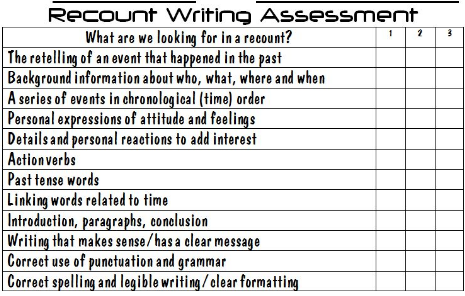
Recount the experience.
Monday, 30 May 2016
Ministry exam practise and answer key: 2013/2014
https://sites.google.com/site/socialstudiesfornonarabs/ministry-exams
https://sites.google.com/site/socialstudiesfornonarabs/ministry-exams
OARS Testing- Mathematics 30/5
https://oars.acer.edu.au/australian-international-school-uae
To get your password
https://sites.google.com/site/8jmaths/oars-passwords
https://oars.acer.edu.au/australian-international-school-uae
To get your password
https://sites.google.com/site/8jmaths/oars-passwords
Sunday, 29 May 2016
Ministry exam practise and answer key: 2012/2013
https://sites.google.com/site/socialstudiesfornonarabs/ministry-exams
https://sites.google.com/site/socialstudiesfornonarabs/ministry-exams
How to write film review 29/5
http://www.wikihow.com/Write-a-Movie-Review
Read the sample 'Dark Knight' review (First one) then read article about how one is constructed.
Tuesday, 24 May 2016
Science: How to write a chemical equation 24/5
https://sites.google.com/site/8jsciencematter/chemical-reactions
https://sites.google.com/site/8jsciencematter/chemical-reactions
Monday, 23 May 2016
Practise exam: Ministry test 2
https://sites.google.com/site/socialstudiesfornonarabs/term-3-the-arab-world
Answers to come
https://sites.google.com/site/socialstudiesfornonarabs/term-3-the-arab-world
Answers to come
Monday 23/ 5 Graphing quantitative data: Histogram
Histograms are used to show distributions of variables while bar charts are used to compare variables. Histograms plot quantitative data with ranges of the data grouped into bins or intervals while bar charts plot categorical data.
Quantitative data is information about quantities; that is, information that can be measured and written down with numbers. Some examples of quantitative data are your height, your shoe size, and the length of your fingernails.
Task:

Draw a histogram to represent this data. Remember to include title and label axis.
Histograms are used to show distributions of variables while bar charts are used to compare variables. Histograms plot quantitative data with ranges of the data grouped into bins or intervals while bar charts plot categorical data.
Quantitative data is information about quantities; that is, information that can be measured and written down with numbers. Some examples of quantitative data are your height, your shoe size, and the length of your fingernails.
Task:
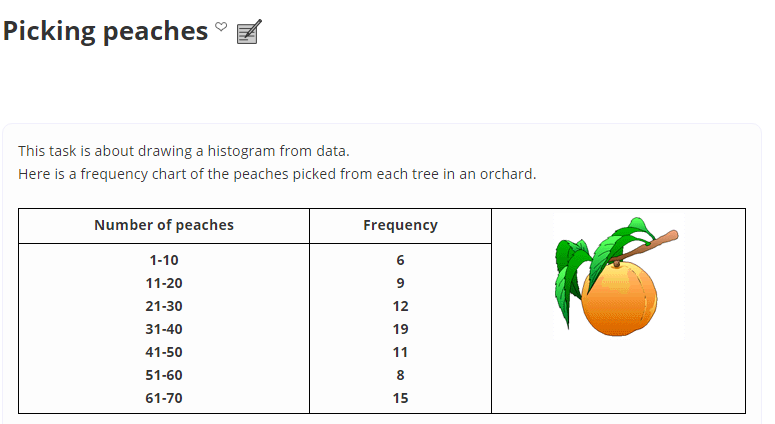
Draw a histogram to represent this data. Remember to include title and label axis.
Chemistry- Chemical reactions 23/5

The unbelievably exciting video from today.
https://www.youtube.com/watch?v=qVWkTBSRElo
Be sure to take notes, particularly of the new keys words as you will need to know what they are tomorrow.
The unbelievably exciting video from today.
https://www.youtube.com/watch?v=qVWkTBSRElo
Be sure to take notes, particularly of the new keys words as you will need to know what they are tomorrow.
Sunday, 22 May 2016
Data measures revisit: 23/5

1) Find the mode of both classes
2) Find the range of both classes
3) Find the median of both classes
4) Find the mean of both classes
Extensions:
5) Find upper quartile of both classes
6) Find lower quartile of both classes.
7) Draw two stem and leaf graph to represent both sets of data
8) Make a statement and justify which class were the better kickers


Saturday, 21 May 2016
PHYSICAL CHANGES 22/5
Understand that a physical change is a change in state,
shape, or size, without the formation of a new substance.
a) Most objects around us are not pure substances but
mixtures. A mixture is two or more parts blended together yet keeping their own
properties. Mixtures can be separated using their physical properties like
size, shape, color, volume, density, and state. This is called a physical
separation. Using a filter to separate a mixture of different-sized matter is
one example. A filter is a tool used to separate things by size.
b) Some mixtures are not easily separated. These are called
solutions. A solution is a mixture in which the substances are completely
blended so that the properties are the same throughout. The substances are
mixed evenly so they stay blended. When one material forms a solution with
another material, we say it dissolves. Some solids dissolve in water and some
do not. Solubility is a measure of the amount of a material that will dissolve
in another material. Liquid solutions are usually transparent, evenly colored,
and never separate into layers.
Revise chemical and physical change
Changing matter – physical (ice – water- water vapour)
http://www.bgfl.org/bgfl/custom/resources_ftp/client_ftp/ks3/science/changing_matter/index.htm
Reversible or irreversible changes:
http://www.bbc.co.uk/schools/scienceclips/ages/10_11/rev_irrev_changes_fs.shtml
Tuesday, 17 May 2016
Geography: Town planning 17/5
Catch up session with reflections. Remember, One of these is to be filled out for each week (Not one each session)
Read prompts carefully. In some cases you will need to take screen shots. The prompts are different for each week. (By the end of the week you should have completed two)
Please email me immediately if your group has not yet shared this google doc with me.
Catch up session with reflections. Remember, One of these is to be filled out for each week (Not one each session)
Read prompts carefully. In some cases you will need to take screen shots. The prompts are different for each week. (By the end of the week you should have completed two)
Please email me immediately if your group has not yet shared this google doc with me.
Healthy Eating at sporting events campaign 17/5
https://www.youtube.com/watch?v=3ENmGpUKH0M
Watch this and comment on the techniques used to promote this campaign.
https://www.youtube.com/watch?v=3ENmGpUKH0M
Watch this and comment on the techniques used to promote this campaign.
Science week: Student lead experiments week 8 17/5
Your task is to teach a concept that we are focusing on to the class given a demonstration or doing experiments as a class. (Groups of 3 max)
Your lesson will be structured under the following:
Engage (How will you hook the class in?)
Explore (What will you do to explain this task?)
Explain (How will you explain the science that is involved with this experiment or demonstration)
Extend (or Elaborate) Can you further extend this learning?)
Evaluate (How do you know students have achieved the learning focus?)
Today you are to explore possible experiments that will be suitable to do with you partner/s.
Consider safety, access and cost of equipment.
Your task is to teach a concept that we are focusing on to the class given a demonstration or doing experiments as a class. (Groups of 3 max)
Your lesson will be structured under the following:
Engage (How will you hook the class in?)
Explore (What will you do to explain this task?)
Explain (How will you explain the science that is involved with this experiment or demonstration)
Extend (or Elaborate) Can you further extend this learning?)
Evaluate (How do you know students have achieved the learning focus?)
Today you are to explore possible experiments that will be suitable to do with you partner/s.
Consider safety, access and cost of equipment.
Subscribe to:
Posts (Atom)